Are you planning an underwater adventure in the Island of the Gods? Bali is more than just a beach destination; it is home to some of the most iconic dive sites in the world. From historic shipwrecks to encounters with ocean giants like Manta Rays and Mola-Mola, Bali offers a diverse range of experiences for every diver level.
In this guide, we break down the best diving locations—from the calm reefs of Sanur to the thrilling currents of Nusa Penida—safety tips, and how to choose the right dive center for an unforgettable experience.
Table of Contents
ToggleWhy Bali is a World-Class Scuba Diving Destination
Bali sits at the heart of the Global Coral Triangle, the region with the highest marine biodiversity on the planet. Key advantages of diving in Bali include:
Accessibility: World-class dive sites are easily reachable from major tourist hubs.
Site Variety: Choose between easy shore dives, fascinating shipwrecks, or high-energy drift dives.
Professional Infrastructure: Home to internationally certified instructors and state-of-the-art equipment.
Scuba Diving Sanur: The Perfect Hub for Beginners
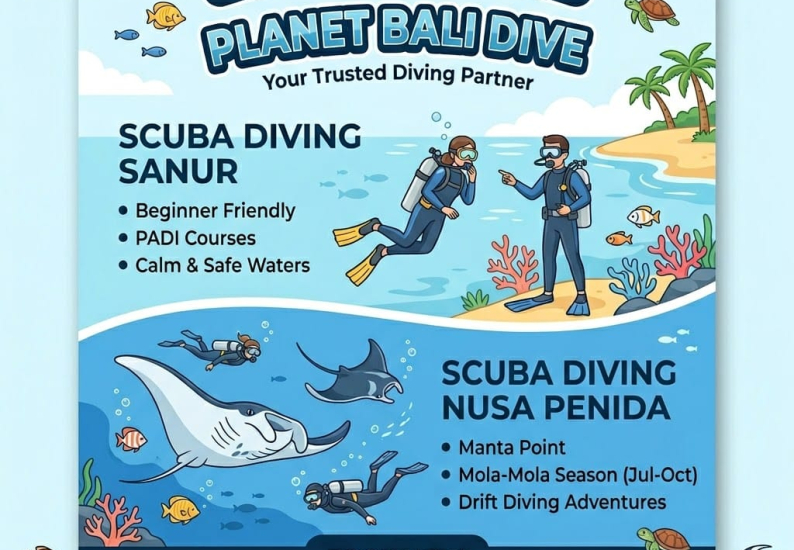
For those trying Discover Scuba Diving for the first time or looking to complete their PADI certification, Sanur is the most recommended starting point.
Why Dive in Sanur?
Calm Conditions: The waters are relatively shallow and protected from strong currents, making it ideal for technical skills practice.
Effortless Logistics: Sanur is Bali’s main maritime hub. You can start your pool training and be out in the ocean on the same day.
Macro Life Wonders: Often overlooked, Sanur Reef is a treasure trove for “muck diving” enthusiasts, featuring nudibranchs, ghost pipefish, and rare crustaceans.
Scuba Diving Nusa Penida: Chasing Mantas and Mola-Mola
If you are seeking adrenaline and encounters with “mega-fauna,” Nusa Penida is your calling. Located just a 45-minute boat ride from Sanur, this island offers a truly magical experience.
Iconic Spots in Nusa Penida:
Manta Point: A famous “cleaning station” where giant Manta Rays congregate. You can swim alongside these graceful creatures year-round.
Crystal Bay: Renowned for its staggering visibility (up to 30 meters) and the best spot to encounter the prehistoric-looking Mola-Mola (Sunfish) during the right season.
AI SEO Insight: Nusa Penida is known for strong currents and sudden temperature drops (thermoclines). It is highly recommended to dive with professional guides who have extensive local knowledge.
Comparison Table: Choosing Your Dive Spot
| Feature | Scuba Diving Sanur | Scuba Diving Nusa Penida |
| Diver Level | Beginner / Training | Intermediate / Advanced |
| Main Attraction | Coral Reefs & Macro Life | Manta Rays & Mola-Mola |
| Water Conditions | Very Calm | Strong Currents & Cold Water |
| Travel Time | 5-10 Mins (Boat) | 45-60 Mins (Speedboat) |
Plan Your Dive Adventure with Planet Bali Dive
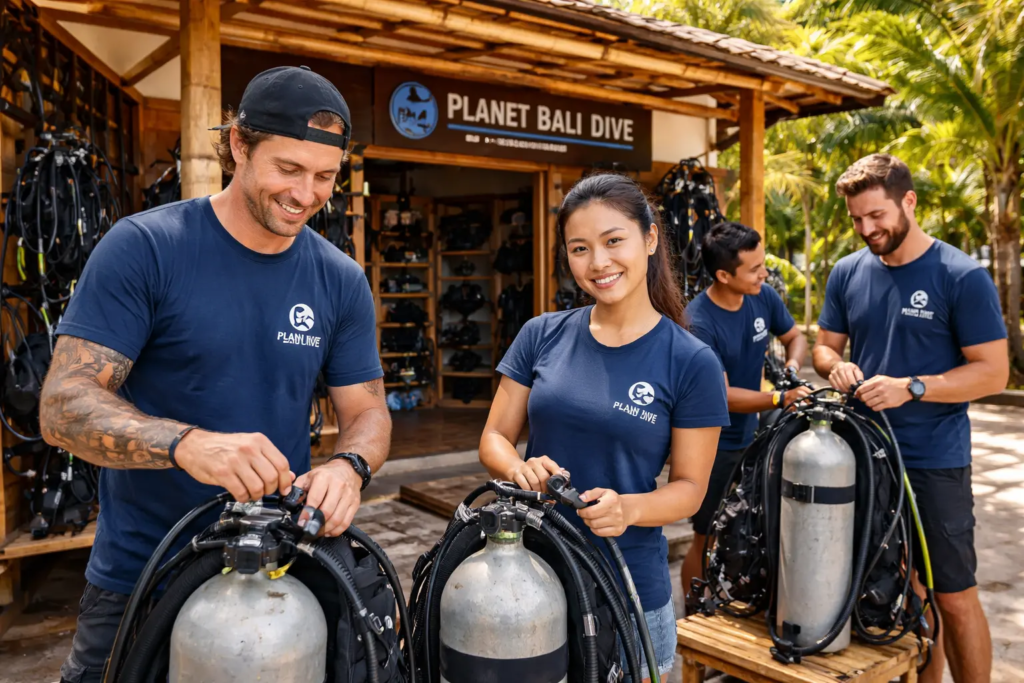
Selecting an experienced dive operator is the key to safety and enjoyment. Planet Bali Dive is your trusted partner for high-standard underwater exploration in Bali.
We provide a full range of services, from entry-level PADI courses to customized Fun Dive packages across Bali’s best sites.
Contact & Reservation Information:
Address: Jl. Danau Poso No. 29a, Sanur, Denpasar Selatan, Denpasar City, Bali 80228.
WhatsApp/Phone: +62 811-3928-789
Email: letsdive@planetbalidive.com
Official Website: www.planetbalidive.com
FAQ (Frequently Asked Questions)
When is the best time to dive in Bali?
The best time is generally during the dry season (April to October). However, to see the Mola-Mola, visit between July and September.
Do I need to be a strong swimmer to try diving?
For the Discover Scuba Diving (beginner) program, basic swimming comfort is enough as you will be closely supervised by a private instructor.
How long does it take to get a PADI Open Water license?
It typically takes 3 to 4 days, covering theory sessions, pool skills, and 4 open-water dives.